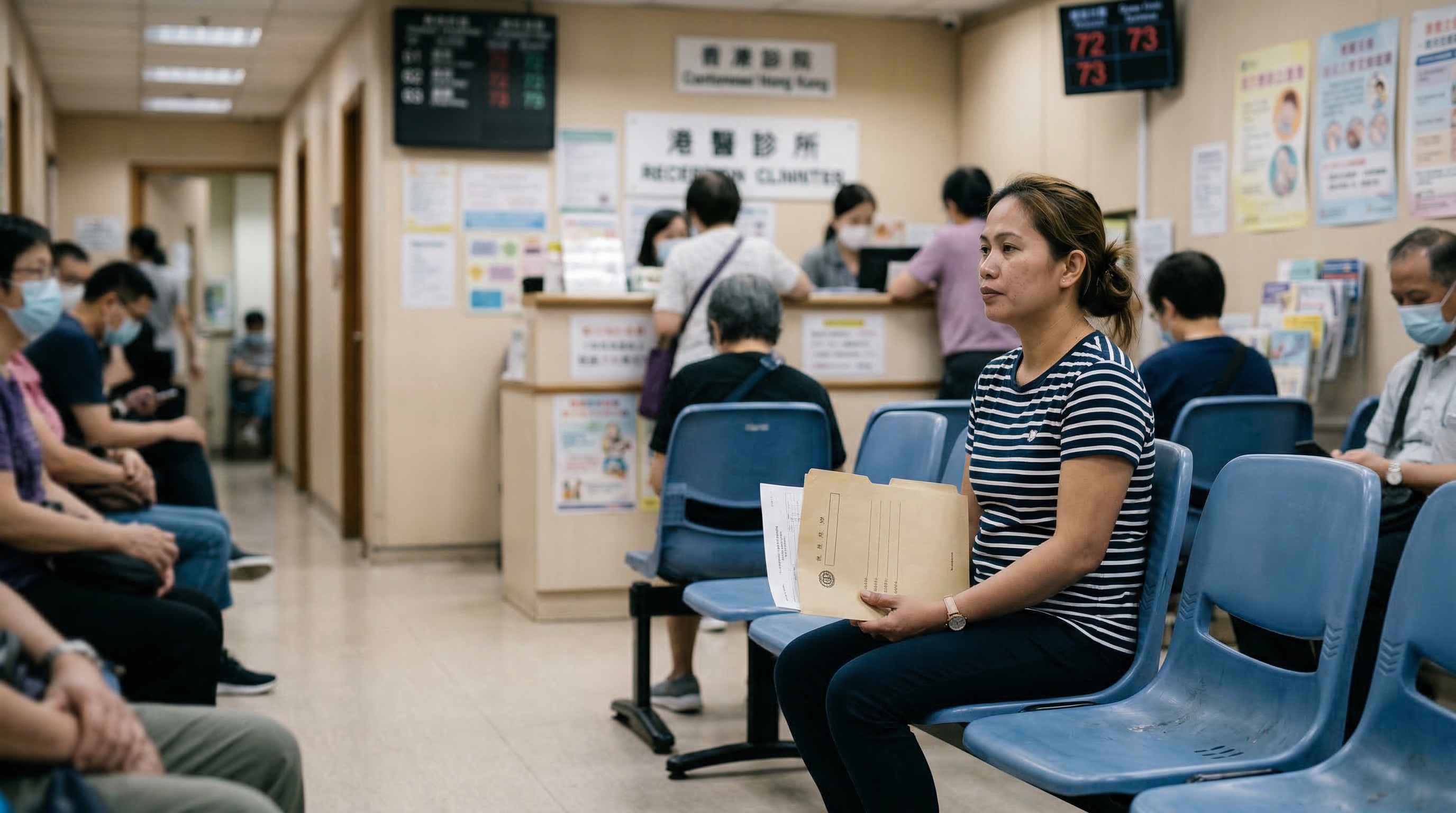
"She's been exhausted lately. I took her to the clinic, and the doctor wants to run more tests… what do I do now?"
Many employers go into a panic the moment they hear this — Am I responsible for the medical bills? Should I terminate the contract? Can she still work?
This guide isn't here to alarm you. It's here to help you understand: what the process actually looks like, roughly how much it costs, what your responsibilities are as an employer, and what you don't need to worry about.
📋 This guide covers: diagnosis timeline · public hospital cost breakdown · employer legal responsibilities · whether your helper can still work · common questions answered
Step One: When She Says She Feels Unwell
It rarely happens suddenly. She might mention:
- Constant fatigue — "I'm tired all the time."
- A persistent pain in her abdomen, chest, or back.
- A cough that won't go away after weeks.
Typically, you'll bring her to a nearby GP first. The doctor may arrange a blood test or X-ray, and refer her to a public hospital specialist if needed.
Important: a diagnosis doesn't happen on the day. From the first GP visit to receiving a formal diagnosis, it usually takes 1 to 4 weeks — sometimes longer. There's no need to make any major decisions before you have a confirmed picture.
💡 Real case (anonymised): In 2025, an employer in Tai Koo noticed her Indonesian helper had been coughing persistently for over 6 weeks. After a GP referral to a public hospital, the full diagnosis took about 3 weeks. The employer continued paying salary throughout, stayed in communication, and worked together with the helper to find the right path forward.
The Diagnosis Process: Clinic to Hospital — How Long Does It Take?
Hong Kong's public healthcare referral pathway generally works like this:
The full diagnosis process typically takes 1 to 4 weeks. In urgent situations, the hospital can expedite the process.
What Does Treatment Look Like? How Long Does It Take?
Using chemotherapy as the most common example:
Each chemotherapy cycle
Typically involves 5 consecutive days of treatment (injections or infusions), followed by roughly 3 weeks of rest for the body to recover.
One cycle takes about 4 weeks in total.
A full course usually spans several cycles
Using 3 chemotherapy cycles as an example, the total treatment period is roughly 3 months.
The number of cycles is determined by the treating doctor based on the type and stage of cancer.
Side effects vary significantly from person to person
Some people experience mild side effects and can carry on with daily life during treatment. Others have stronger reactions and need more rest.
The doctor will assess the situation at each follow-up and issue sick leave certificates accordingly.
How Much Does It Actually Cost? (HK Public Hospital Figures)
Hong Kong public hospitals charge subsidised rates for domestic helpers. Current Hospital Authority fees:
| Item | Cost | Notes |
|---|---|---|
| Specialist outpatient clinic (per visit) | HK$135 | Public hospital specialist, each attendance |
| General ward (per day) | HK$120 | Inpatient stay, charged per day |
| Example: 15-day hospital stay | HK$1,800 | If admission needed due to treatment or side effects |
| Clinic visits (approximate) | ~HK$800 | GP, referrals, and follow-up consultations |
| Tests and investigations | HK$1,000–3,000 | Scans, blood tests, etc., depending on type |
| Approximate total range | HK$3,000–8,000 | For reference only — actual costs depend on treatment |
⚠️ The figures above are subsidised public hospital rates. Private hospital costs can be several times higher. Check your helper's insurance policy before making any decisions.
Insurance may cover part of the costs, but coverage varies widely between policies. Check your helper's insurance policy now — look for: the medical expense limit, any pre-existing condition exclusions, and whether emergency repatriation is included.
Can She Still Work After a Diagnosis?
A cancer diagnosis does not automatically mean she can't work. It depends on three things: the doctor's advice, her physical condition, and the nature of her duties.
The doctor's sick leave certificate is the official document that determines whether your helper can work. Employers should follow it — not make their own assessment.
What Are Your Responsibilities as an Employer?
Under Section 9 of Hong Kong's Employment Ordinance (Cap. 57), employers are required to provide "free medical treatment" for domestic helpers. In practice, this means:
- Arranging doctor appointments and basic medical consultations
- Providing necessary medication
- Ensuring the helper receives appropriate medical care
Employers are not automatically liable for all cancer treatment costs. Hong Kong public hospital subsidised rates keep costs relatively low, and insurance can cover a significant portion.
📌 What you need to do: arrange medical appointments, adjust duties in line with sick leave certificates, stay in communication with your helper about her preferences, and check your insurance coverage.
What you are not automatically responsible for: the full cost of expensive private hospital treatment (unless your contract states otherwise), or medical costs in your helper's home country once the contract ends.
What If She Wants to Return Home for Treatment?
Some helpers choose to return to the Philippines or Indonesia for treatment. Common reasons include:
- Family support — being surrounded by loved ones during a difficult time
- Language comfort — communicating with doctors in their native language
- Lower treatment costs in their home country
- A preference to recover in a familiar environment
If your helper expresses a wish to return home, there are several things to consider:
Confirm she is fit to fly
Depending on her condition or where she is in treatment, long-haul travel may not be advisable. Get the doctor's opinion before making any arrangements.
Terminate the contract lawfully
Under the Employment Ordinance, either party may terminate the contract by giving one month's notice (or paying one month's salary in lieu). You'll also need to notify the Immigration Department and complete the departure formalities. See also: How to handle a helper who wants to resign.
Who pays for the return flight?
Under the standard employment contract, the employer is responsible for the helper's return airfare when the contract ends. The specific liability in an early-termination scenario depends on the circumstances and contract terms — speak to a consultant to confirm.
If your helper chooses to complete one or more treatment cycles before returning home, you can discuss timing together and plan the contract termination around that.
What Experienced Employers Typically Do
Based on cases we've handled, the employers who navigate this situation well tend to share a few common approaches:
- Wait for the diagnosis before making any decisions. Don't rush to terminate. Get the full picture first.
- Adjust duties in line with the doctor's advice. Follow the sick leave certificate — don't make your own call on what she can or can't do.
- Have an open conversation about her wishes. Does she want to be treated in Hong Kong, or return home? Respecting her preference makes it easier to find a workable solution.
- Check the insurance immediately. Knowing your coverage prevents unnecessary financial exposure.
- Keep written records of everything. Medical reports, sick leave certificates, communications — store them all.
Many helpers remain functional in the early stages of diagnosis. Avoiding premature termination often means clearer options for everyone — and sometimes, waiting just one cycle clarifies the whole picture.
Common Questions from Employers
How DuckDuckDay Can Help
When a situation like this comes up, what most employers need isn't an immediate fix — it's someone to help them think through the situation clearly.
We handle cases like this every year. We understand:
- The Labour Department's specific requirements around sick leave and contract termination
- The Immigration Department's notification and departure procedures
- What documentation is needed for insurance claims
- How to protect your legal position as an employer while also handling the situation fairly
We won't make medical decisions for you. But we can help you understand what you're legally required to do, what your options are, and how to take the next step with confidence.
💡 This article is for general reference only and does not constitute legal advice. Every case is different — we recommend seeking guidance from a licensed employment agency or legal adviser for your specific situation.
Not sure what to do next?
If your helper has been diagnosed and you don't know how to handle the situation, we can help you understand the process, clarify your responsibilities, and plan your next steps.
WhatsApp Us 💬