- Domestic helpers relocating from urban districts to remote new developments like Silicon Hill are at higher risk of isolation and early resignation without structured onboarding support.
- The first month of onboarding directly determines placement stability — employers who invest time in orientation see significantly more reliable long-term performance from their domestic helper.
- A simple transport information card listing bus routes, supermarkets, and the estate management office costs almost nothing but dramatically reduces a domestic helper's anxiety and daily dependency on the employer.
- Avoid rushing into full work routines in week one — ensure your domestic helper is oriented in the local area before establishing daily task expectations.
Finding the right domestic helper is step one. But many Silicon Hill employers don't realise that the most common reason a placement fails is not salary, not job requirements — it's the domestic helper not knowing how to navigate the new environment.
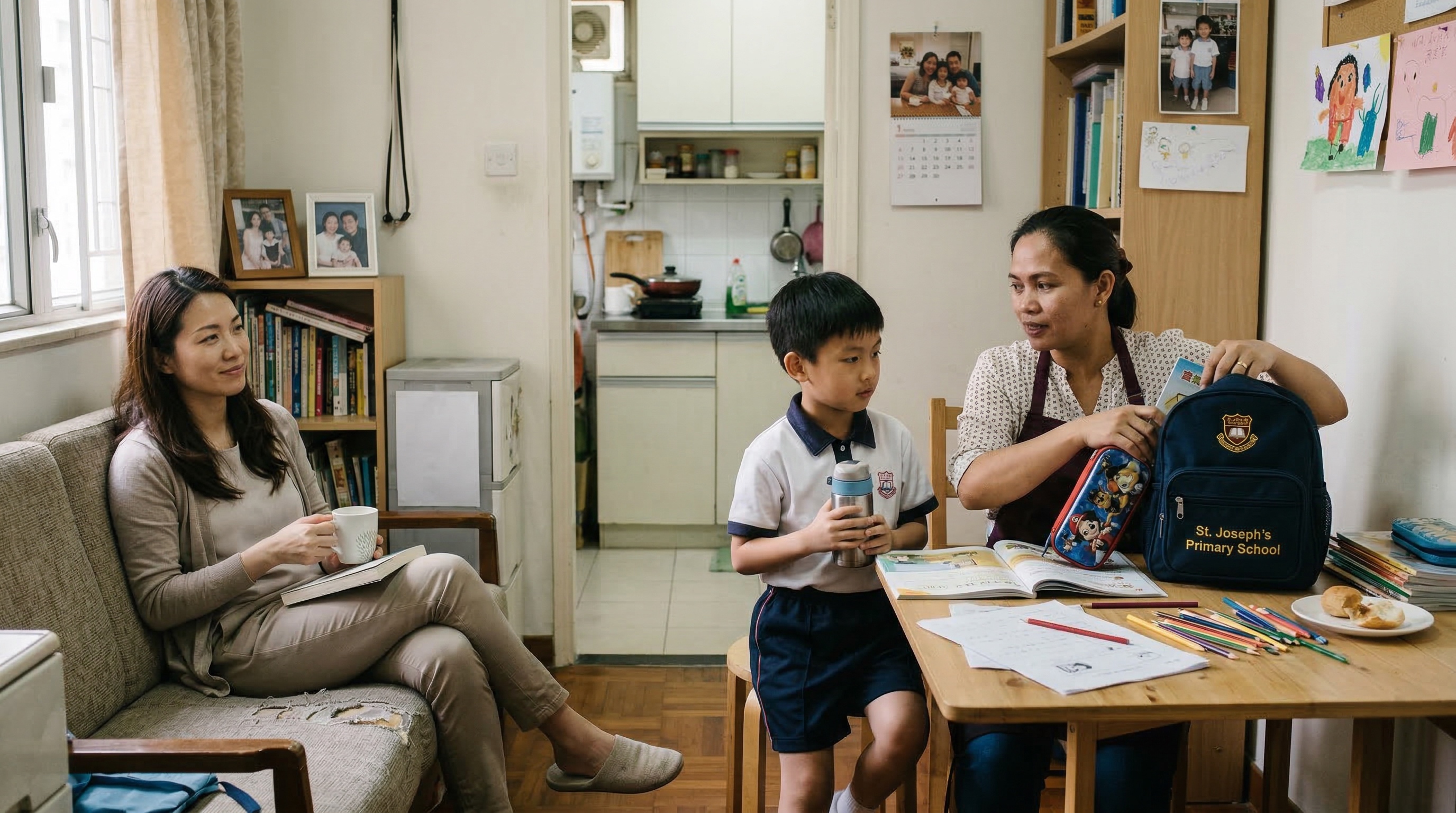
Silicon Hill and University Hill are among Hong Kong's fastest-growing residential areas. They're peaceful and pleasant to live in — but for a helper arriving from Tsuen Wan, Mong Kok, or Yuen Long, the quiet and relative remoteness can feel genuinely disorienting.
Not knowing how to catch a bus to the market, not knowing where the nearest pharmacy is, not knowing how to get to church on Sunday — these seem like small things, but they accumulate. An isolated helper becomes an anxious helper, and an anxious helper is far more likely to resign in month two.
Based on DuckDuckDay's years of tracking new-estate domestic helper placements, employers who invest in first-month onboarding see retention rates more than double compared to those who don't. Here are the five steps that make the biggest difference.
📍 This guide applies to: Silicon Hill (白石角), University Hill (大學丘), Science Park residential estates, and all new Pak Shek Kok / Tai Po developments.
1️⃣ Week One: Give Her an Orientation Walk
Don't rush to brief her on household tasks in week one. The priority is making sure she knows: how do I live in this area?
Walk your domestic helper around and point out:
- 🚌 The nearest bus stop — show her which buses go where and roughly how long they take
- 🛒 The nearest supermarket — ideally walking distance (Wellcome, TASTE, or the Fusion in Science Park)
- 🍱 The nearest restaurant or café — she'll use this on her day off
- 🏪 The nearest 7-Eleven or convenience store — for small urgent purchases
- 🏢 The building management office — for reporting issues, collecting parcels
- 🏥 The nearest clinic — essential for any health issue
This tour takes about 45–60 minutes. The return on that investment is enormous. A domestic helper who isn't afraid to go out independently is a calmer, more productive, and more loyal employee.
💡 Consultant tip: Take a few quick photos of key locations — the bus stop, the management office entrance — and save them to her phone. This tiny gesture means she can find her way back independently without having to ask you every time.
2️⃣ Prepare a Transport Cheat Sheet (Highest ROI Tool)
Experienced employers typically make a simple A4 transport reference sheet — in English or Chinese — and stick it on the kitchen notice board or fridge. It takes 15 minutes to make and saves weeks of repeated questions.
🚌 Silicon Hill / University Hill Transport Reference (2025–2026 Fares)
| To University MTR Station | Bus 272A, approx. HK$5.1 (adult Octopus) |
| To Sha Tin city centre | Minibus 28S, approx. HK$7.7–$10 |
| To Science Park | Bus 272A, approx. HK$4.6–$5.1 |
| To Tai Po Hui market (groceries) | Minibus 20C / 20K, approx. HK$6–$8 |
| To Tai Po Mega Mall | Bus 272A → alight Tai Po Hui, approx. 20 min |
| To Ma On Shan (shopping) | Minibus 28S → Wu Kai Sha, approx. 15 min |
The ideal format for each route is:
- Origin → Destination
- Bus / minibus number
- Approximate fare
- Which stop to get off at
One sheet of A4 paper. It gives your domestic helper the confidence to move around independently — and saves you from answering the same transport questions every week.
3️⃣ Groceries: Set Up a Routine in Month One
Silicon Hill is not a market-dense area. A domestic helper used to urban living will find the relative scarcity of nearby wet markets and shops genuinely strange at first. Proactively setting up a grocery routine removes a major source of daily friction.
First grocery run — take her yourself
Bring her to one of the following on her first week:
- 🥬 Tai Po Hui Market — freshest produce, best prices for vegetables and meat
- 🛒 Tai Po Mega Mall (ParknShop / AEON) — comprehensive, frequent promotions
- 🏪 Science Park Fusion — most convenient, but limited selection
Establish a weekly pattern
The most common approach used by experienced Silicon Hill employers:
- 📅 Once a week — main grocery shop at Tai Po Hui Market (cheapest, freshest)
- 🏪 Top-ups as needed — the downstairs supermarket or Science Park Fusion
- 💳 Set a clear weekly budget — agree on a weekly grocery amount upfront to avoid ambiguity
💡 Practical tip: On that first market trip, point out which stalls you prefer, which days have the freshest fish, and what brands your family uses. You only need to say it once — after that, she can shop independently with confidence.
4️⃣ Handling Isolation — The Domestic Helper Challenge Most Agencies Don't Mention
This is the most common and least-discussed challenge for Silicon Hill domestic helper placements.
A domestic helper arriving from Mong Kok, Yuen Long, or Tsuen Wan enters a completely different world. Surrounded by hills, needing transport for every errand, with no Filipino or Indonesian food shops nearby, and Sunday gatherings requiring a bus ride to Sha Tin or Tai Po — for someone used to urban density, this quiet can feel profoundly lonely.
The solution is straightforward: proactively grant social freedom in month one.
- ⛪ Allow church attendance — most Filipino domestic helpers are Catholic; Indonesian helpers may be Christian or Muslim. Regular religious observance is a genuine psychological anchor, not a distraction
- 👥 Allow helper gatherings — community meetups with other domestic helpers are a critical support network, especially in quieter areas
- 🚉 Allow regular outings — e.g., Sunday afternoons at University MTR or Tai Po town centre
- 📱 Allow family calls — regular contact with family back home in Indonesia or the Philippines is one of the most powerful stabilisers of domestic helper wellbeing
Give generous social latitude in month one, and your helper almost always settles into a stable routine by month two. Employers who restrict movement too early in a quieter estate see a much higher rate of early resignation.
📊 DuckDuckDay observation: Among our Silicon Hill placements, approximately 40% more helpers reported feeling "unsure how to get around" compared to urban placements in the first week. Yet among those whose employers completed a basic orientation, 3-month retention was identical to central-area placements. The location isn't the problem — the onboarding is.
5️⃣ Prepare an Emergency Information Card
High-retention employers share one habit: they give their helper a small reference card — either printed or saved in her phone — with the following information:
- 🏠 Your full home address (building name, block, floor and flat) — essential if she ever needs to direct a taxi home
- 🚌 Nearest bus stop name — useful when navigating back from an unfamiliar location
- 📞 Your mobile number — primary emergency contact
- 📞 A secondary emergency contact (spouse, family member)
- 🏥 Nearest clinic address and phone number
- 🚓 Nearest police station (Tai Po Police Station: 35 Tai Po Tau Path)
- 🦺 Building management office number
The logic is simple: a domestic helper who knows she can handle emergencies is a calmer, more confident, longer-staying employee. Fifteen minutes of preparation today can meaningfully reduce turnover risk over the next two years.
Conclusion: One Month of Investment, Two Years of Stability
Silicon Hill is a wonderful place to live. But for a newly arrived domestic helper, it is an unfamiliar world that requires active introduction. Many employers assume the work is done once the domestic helper arrives — but the first month of onboarding is actually the critical period that determines whether a placement succeeds or fails.
Five things to do:
- Give her an orientation walk in week one
- Prepare a transport cheat sheet
- Take her on one grocery run and establish a weekly routine
- Grant generous social freedom in month one to prevent isolation
- Prepare an emergency information card
None of these are complicated. But each one removes friction, builds trust, and makes it far more likely that your helper will still be with you two years from now.
If you're moving into Silicon Hill or University Hill and need help finding the right candidate, see our Pak Shek Kok New Estate Hiring Guide, or WhatsApp us directly — our Wu Kai Sha consultant knows the area and can come to your estate to sign contracts.