- Home safes start from HK$800, but protection levels vary dramatically
- Professional safe deposit vaults cost about HK$6,000–16,500 per year
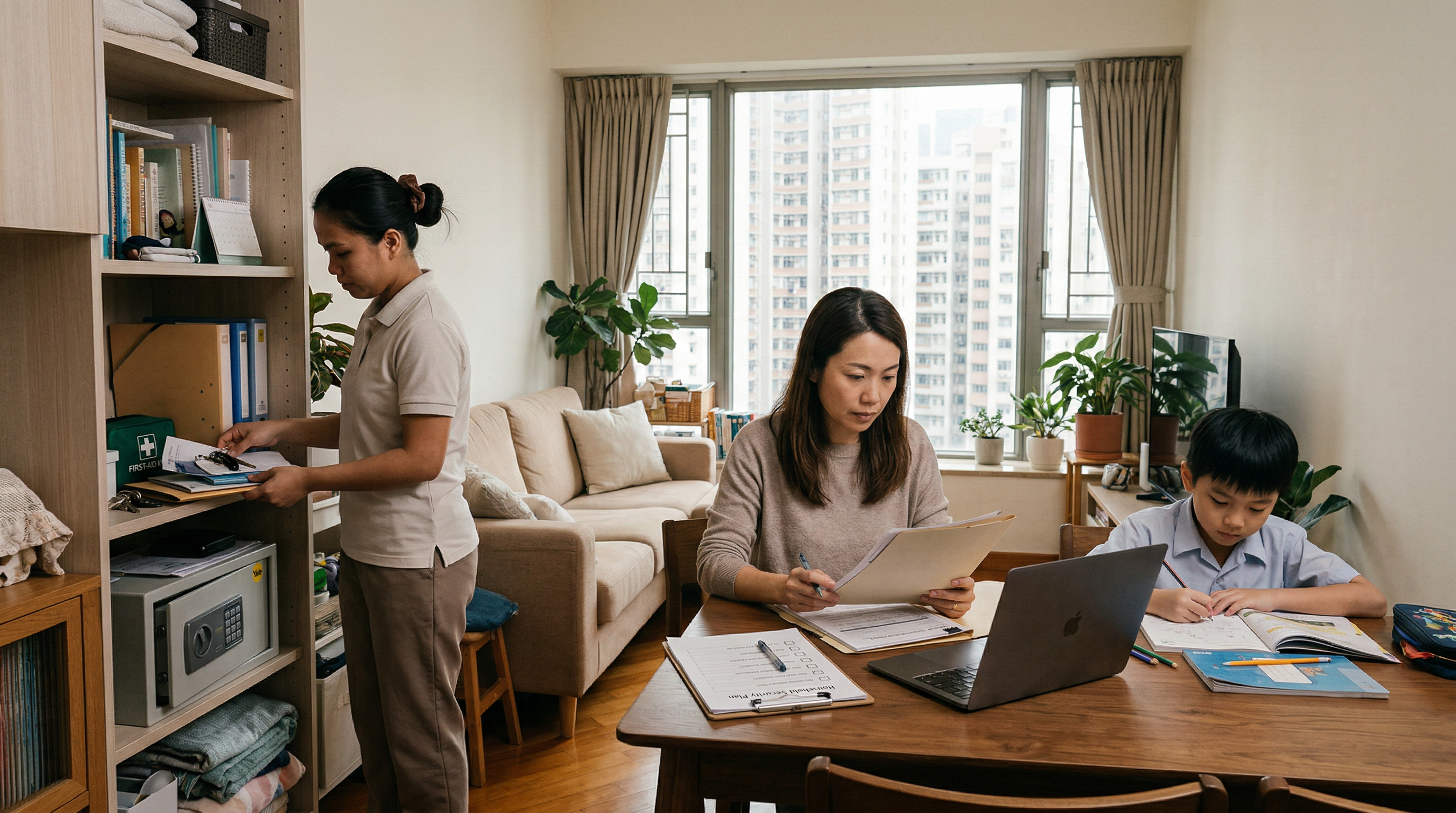
- Household security with helpers is about systems, not suspicion
- Clear house rules and item zoning prevent most misunderstandings
Hong Kong flats are compact, but most families still keep important documents, cash, jewellery, and sometimes foreign currency at home. When a domestic helper lives in, managing valuables goes beyond simply locking things away — it requires a proper household security system.
This guide takes a practical look at the home safe box options available in Hong Kong, compares professional safe deposit vault services, and — most importantly — explains how sensible systems protect your belongings while preventing unnecessary misunderstandings between employers and helpers.
Home Safe Box Market in Hong Kong
The local retail market offers a wide range of home safes, from basic electronic lock models to fire-rated and waterproof units. The following price ranges reflect actual retail pricing from local platforms including YOHO Hong Kong:
Entry Level (HK$800–2,000)
- Capacity: 6–14 litres — fits passports, small amounts of cash, small jewellery
- Lock: Electronic keypad, some with backup key
- Protection: Basic pry-resistance, no fire certification
- Best for: Renters, budget-conscious households
Mid-Range (HK$2,000–6,000)
- Capacity: 20–40 litres — holds A4 folders, multiple jewellery pieces
- Lock: Keypad + key dual authentication, some with fingerprint
- Protection: Some carry 30-minute fire certification, thicker steel
- Best for: General families with documents and moderate-value items
Premium (HK$6,000–16,000+)
- Capacity: 50 litres and above — fits laptops, large document volumes
- Lock: Fingerprint + keypad + key triple authentication
- Protection: UL or JIS fire-certified (60–120 minutes), waterproof seal
- Best for: Families with high-value items or sensitive business documents
| Tier | Price Range | Fire Rating | Lock Type | Best For |
|---|---|---|---|---|
| Entry | HK$800–2,000 | None | Electronic keypad | Passports, small cash |
| Mid-Range | HK$2,000–6,000 | 30 min | Keypad + key | Documents, jewellery, cash |
| Premium | HK$6,000–16,000+ | 60–120 min | Fingerprint + keypad + key | High-value items, business docs |
Limitations of Home Safes
A home safe offers convenience, but there are practical limits you should be aware of:
- Portability risk: Safes under 20 kg can be physically removed if not bolted down
- Limited fire protection: Entry-level models typically have zero fire rating
- Space constraints: Hong Kong flat sizes limit where you can place a large safe
- Password sharing: The more family members who know the code, the higher the leak risk
- Insurance caps: Most home insurance policies cap payouts for safe contents at modest amounts
Practical tip: If your safe weighs under 25 kg, bolt it to a wardrobe base or wall with expansion bolts. An unbolted small safe offers roughly the same security as a locked drawer.
Professional Safe Deposit Vaults: Not a Luxury — a Risk Management Tool
Many Hong Kong employers focus on buying a stronger safe. But the real decision is whether valuables should be kept inside the household environment at all.
This is not a question of price. It is a question of risk exposure. When a home has a live-in helper, children, and regular visitors, the domestic environment carries inherent security variables. The core value of a professional vault is removing high-value items from that environment entirely.
Professional Vault Specifications
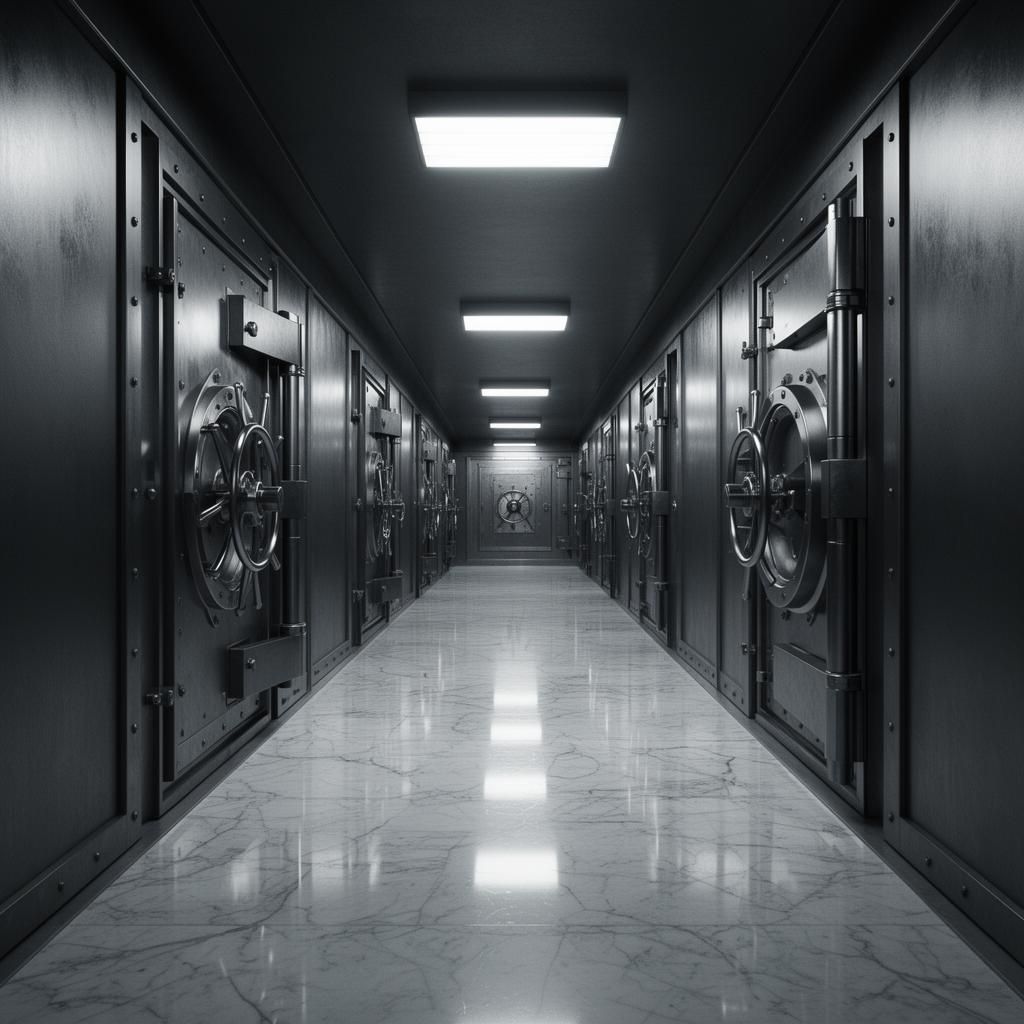
Providers such as Securall Group offer facilities with the following specifications:
- 24-hour security monitoring with multi-layer access control (biometric + passcode + physical key)
- Private vault rooms requiring in-person identity verification, with full CCTV coverage
- Fire, flood, and seismic protection built to bank-grade standards
- Some providers offer insurance covering vault contents as an add-on
Market Pricing Reference
Annual fees vary significantly by box size and security level:
- Small box (documents, passports): approx. HK$6,000–8,000/year
- Medium box (jewellery, cash, multiple documents): approx. HK$9,000–12,000/year
- Large box (extensive jewellery, precious metals, business documents): approx. HK$13,000–16,500/year
Bank safe deposit boxes are generally cheaper, but availability has been extremely tight in recent years — wait times can stretch to months or over a year. Independent vault providers are usually available immediately, with more transparent security specifications.
Cost perspective: A HK$10,000/year vault costs roughly HK$27 per day — about the price of a coffee. Compared to keeping hundreds of thousands of dollars worth of jewellery at home, this is risk hedging, not spending.
Professional Vault vs Home Safe: What Is the Real Difference?
Most people frame this as a "cheap vs expensive" choice. From a risk management perspective, the real distinction is risk exposure — items kept at home remain subject to every variable in the domestic environment.
Home Safe: Risk Blind Spots
- Location exposure: Household members, helpers, and visitors may become aware of the safe's location — even without the code, the location itself is a risk
- Key management: Where is the backup key stored? If it is in a drawer, the lock is effectively bypassed
- Burglary resistance: Entry-level safes offer virtually no resistance to professional tools; mid-range models may delay access by only a few minutes
- Internal misunderstanding risk: When employers frequently open the safe, helpers may inadvertently see the contents, creating unnecessary psychological pressure and potential for misunderstandings
- Disaster exposure: Entry and mid-range models carry no fire certification — protection during a fire is essentially zero
Professional Vault: Core Advantages
- Complete isolation from the home: Items are not in the household, so no household-related risk applies
- Eliminates employer–helper trust pressure: With high-value items off-site, employers have no reason to worry and helpers face no risk of unwarranted suspicion — both sides benefit
- Bank-grade access control: Biometric + passcode + physical key — non-holders cannot access under any circumstances
- Independent insurance cover: Some providers offer insurance on vault contents, separate from home insurance
- Legal document safety: Property deeds and wills are extremely difficult to replace if lost — a professional vault is the most secure storage option
Cost vs Risk Comparison
| Factor | Home Safe (YOHO etc.) | Professional Vault (Securall etc.) |
|---|---|---|
| Cost Model | One-off HK$500–16,000 | HK$6,000–16,500/year |
| Security Level | Medium (varies by model) | Very high (bank-grade facility) |
| Access | Anytime | By appointment, business hours |
| Fire & Water | Entry: none; Premium: certified | Facility-grade, full protection |
| Insurance | Subject to home insurance caps | Some providers offer independent cover |
| Home Exposure Risk | High — items remain in the home | Zero — fully isolated from home |
| Employer–Helper Friction Risk | Medium — location may be discovered | Zero — items not in the household |
| Best For | Everyday IDs, small cash, daily-use items | Deeds, wills, jewellery, gold, large cash |
Practical Scenarios for Families with Helpers
For households with a live-in domestic helper, the following common situations are worth thinking through carefully:
- Passport and visa copies: Keep originals in a professional vault; keep photocopies at home for daily reference
- Jewellery: Daily-wear pieces go in the home safe; high-value collections go in the vault
- Salary cash: If you pay in cash, withdraw only the current month's amount — avoid storing large sums at home long-term
- Sensitive family documents: Wills, insurance beneficiary forms, and property deeds involve private family matters — storing them at home increases the chance of accidental access
Moving high-value items out of the home is not a statement of distrust toward your helper. It removes the structural conditions that give rise to misunderstandings. When there are simply no high-value items in the house, the question "did she touch my things?" never arises.
Decision Framework: Which Should You Use?
Use a home safe if: You need everyday access — IDs, small cash, frequently used items.
Use a professional vault if: You are storing high-value assets — legal documents, jewellery, precious metals, large cash.
Use both if: You want a layered security strategy — everyday tier at home, core tier in the vault. This is standard practice for many professionally managed households.
Household Security with Helpers: It's About Systems, Not Suspicion
This needs to be said clearly: the vast majority of domestic helpers are honest, hardworking people. But when someone new moves into your home, the absence of clear house rules and item management systems can easily create misunderstandings.
Common scenarios that lead to unnecessary friction:
- An employer leaves cash on a counter, forgets they spent it themselves, and suspects the helper
- Jewellery left on a dresser without a designated spot goes "missing" after the helper tidies up
- Important documents or letters get moved to the wrong place during well-intentioned cleaning
- A child takes money or items, but the employer's first instinct is to blame the helper
These situations happen more often than you might think. The issue is not bad intent from either side — it is the lack of a clear system for managing household items. When the system is clear, everyone feels at ease.
A 3-Level Security System for Families with Helpers
Based on our experience advising families, well-managed households typically adopt a three-tier approach:
Level 1: Everyday Management
- Keep jewellery and watches in a lockable jewellery cabinet or drawer
- Never leave cash on open surfaces or communal storage areas
- Designate fixed spots for Octopus cards, keys, and daily-use items
- Tell your helper clearly which areas do not need cleaning or tidying
Level 2: Important Items
- Purchase a mid-range or better home safe (bolted in place)
- Store passports, birth certificates, insurance policies, and larger cash amounts
- Limit the passcode to the employer couple only
- Check contents regularly and maintain a simple inventory list
Level 3: Core Assets
- Property deeds, wills, high-value jewellery, and precious metals go into a professional vault
- Annual fees of HK$6,000–16,500 — far less than the cost of a single loss event
- Access restricted to the registered holder, ensuring absolute privacy
| Level | Items | Storage Method | Cost |
|---|---|---|---|
| Everyday | Jewellery, Octopus, keys | Lockable drawer / cabinet | HK$0–500 |
| Important | Passports, cash, insurance | Home safe (bolted) | HK$2,000–6,000 |
| Core | Deeds, wills, jewellery | Professional vault | HK$6,000–16,500/yr |
Professional Household Management Advice
Security management is more than buying a safe. Here are the points we most frequently raise with employers during our day-to-day advisory work:
- Communicate house rules on day one. Spend 30 minutes when your helper arrives to explain which areas don't need cleaning and which items should not be moved. Clear expectations prevent 90% of future misunderstandings.
- Create an item inventory. Photograph valuables and record where they are stored. If a dispute ever arises, you have a reference point.
- Don't keep all cash in one place. Spreading it across locations is basic risk management and limits your maximum loss from any single incident.
- Read your home insurance carefully. Most home policies cap cash payouts at HK$2,000–5,000. Valuables may need a separate rider.
- Never set traps. Some employers deliberately leave money in plain sight to "test" their helper. This destroys trust and benefits no one. Build systems, not traps.
Core principle: Good household security management protects everyone — the employer's property and the helper's reputation. Clear systems mean peace of mind for both sides.
Conclusion
Household security management is something every Hong Kong employer should take seriously. The right safe, a clear set of house rules, and — where appropriate — a professional vault service together create an environment where employers feel secure and helpers are protected from unwarranted suspicion.
Many well-managed households include home security planning as part of their preparation checklist when hiring a helper. This is not a sign of distrust — it is a sign of responsible family management.
Frequently Asked Questions
DuckDuckDay Advisory Note
Many experienced employers plan their home security arrangements at the same time as hiring a helper — including safe placement, house rules documentation, and day-one onboarding points. If you are preparing to hire, feel free to WhatsApp us. Our consultants can offer advice tailored to your household setup.
We also work with a trusted security partner and can connect you for further guidance on home safe and vault solutions.