Domestic helpers caring for elderly with dementia face multiple challenges: language barriers, mood swings, wandering risk.
Employers should provide clear daily guidelines, arrange care training, and regularly check in on their helper's stress levels.
As populations age, Alzheimer's disease has become the leading neurodegenerative condition affecting cognitive function in the elderly, posing significant challenges for patients, their families, and caregivers. Early symptoms primarily involve recent memory decline, such as forgetting recent conversations or events, frequently misplacing items, difficulty remembering names or finding the right words, repeatedly asking the same questions, impaired judgement, and inflexibility towards new things. Other early warning signs include decreased ability to plan or solve problems, confusion about time and place, gradual withdrawal from work or social activities, and changes in mood and personality. As the disease progresses, memory loss worsens, and patients may experience disorientation in time and space, difficulty with language, and increasing dependence on others for daily tasks.
Early diagnosis allows timely intervention through lifestyle changes and appropriate medication, helping to slow disease progression.
What Is the MIND Diet?
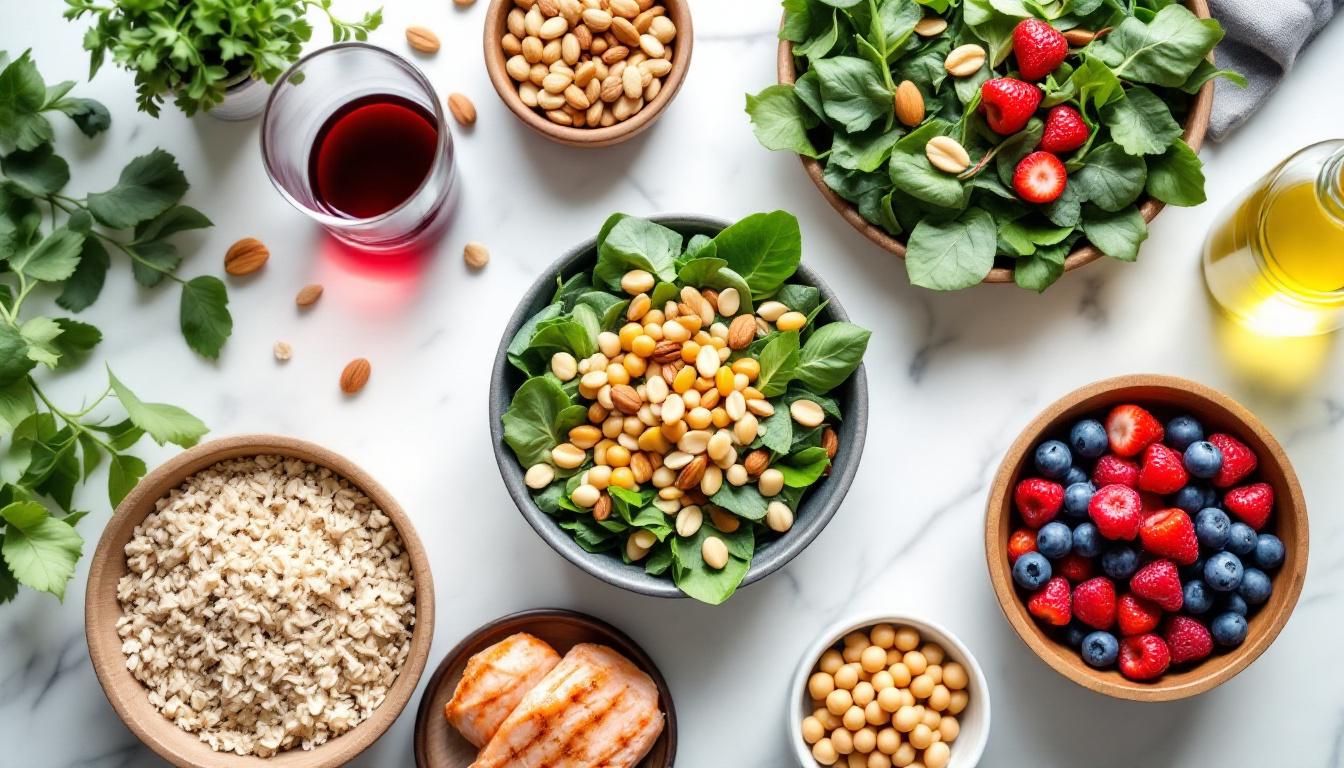
In terms of dietary management, the MIND diet (Mediterranean-DASH Intervention for Neurodegenerative Delay) is widely recommended as a dietary pattern with neuroprotective benefits [1]. Its core recommendations include:
At least three servings of whole grains daily
At least 2 servings of vegetables daily, with at least 1 being dark green leafy vegetables (e.g. spinach, kale, Chinese broccoli)
One glass of red wine (if you do not already drink alcohol, it is not recommended to start)
Nuts as a daily snack
Beans every other day
Poultry and berries at least twice a week
Fish at least once a week
MIND diet core foods: whole grains, leafy greens, nuts, berries, poultry and fish — shown to reduce Alzheimer's risk.
Research shows that strict adherence to the MIND diet can reduce Alzheimer's risk by up to 53%; even moderate adherence can still lower risk by approximately 35% [2].
Unhealthy Foods to Limit
Foods that should be limited include:
No more than one tablespoon of butter daily
Cheese, and fried or fast food no more than once per week
Foods to limit: butter, cheese, fried food and fast food — reducing these supports better brain health.
Olive oil should be used as the primary fat source, with emphasis on consuming dark green leafy vegetables (such as spinach, kale, and romaine lettuce) and berries (blueberries, strawberries, etc.), as they contain polyphenol antioxidants and vitamins that have protective effects on cognitive function. Research shows that combining the MIND diet with vascular risk factor management can provide a comprehensive strategy for whole-brain health in the elderly. Caregivers can prepare colourful, varied-texture meals and involve the elderly in simple food preparation to boost appetite and maintain their dignity.
Practical Cooking Tips for the MIND Diet
Recommended cooking methods include steaming, boiling, braising in broth, stewing, roasting, or quick stir-frying, using a small amount of extra virgin olive oil. Nuts can serve as a daily snack; choose fresh or unsweetened frozen berries.
Using a small amount of extra virgin olive oil with fresh vegetables and healthy ingredients is key to following the MIND diet.
Long-term adherence to the MIND diet provides antioxidants, folate, B vitamins, and Omega-3 fatty acids, reducing neuroinflammation and lowering Alzheimer's risk.
Looking for a helper experienced in elderly care?
DuckDuckDay has successfully matched over 1,000 Hong Kong families, including Filipino and Indonesian helpers with elderly care experience. WhatsApp us to find the right candidate.
Domestic Helpers Caring for Elderly with Dementia: Challenges & Advice
An increasing number of Hong Kong families need domestic helpers to assist in caring for elderly members with dementia. For helpers from the Philippines or Indonesia, caring for Alzheimer's patients presents challenges that are far more complex than general elderly care:
Key Challenges Faced by Domestic Helpers
Dietary management difficulties: The elderly person may forget they have already eaten and request food again, or forget to eat entirely, leading to malnutrition. Helpers need to patiently monitor and record the elderly person's eating patterns.
Mood swings and resistance to care: Elderly with dementia may suddenly become irritable, emotionally agitated, or refuse to bathe or change clothes. Helpers need to understand that these behaviours are part of the illness, not personal attacks.
Compounded language barriers: Helpers already need to adapt to communicating in Cantonese; when faced with an elderly person whose language abilities are deteriorating, the dual barrier makes communication even more challenging.
Disrupted sleep patterns: Some patients experience "sundown syndrome" — increased confusion and behavioural disturbance in the evening — affecting the helper's rest and sleep.
Wandering risk: Elderly with dementia may leave the home unnoticed, creating a risk of getting lost. Helpers must remain vigilant at all times.
How Can Employers Support Their Helper?
1
Provide Clear Daily Routine Guidelines
Write out the elderly person's medication times, mealtimes, and activity schedule in a simple chart that the helper can follow easily. If MIND diet requirements apply, list specific ingredients and portion sizes.
2
Arrange Basic Dementia Care Training
Employers can learn about the basics of dementia care together with their helper — such as how to handle repeated questions and mood swings — so the helper is mentally prepared and equipped with the right coping strategies.
3
Communicate Regularly and Monitor Stress
Caring for elderly with dementia is highly stressful work. Employers should check in regularly with their helper to understand how they are coping, and arrange additional rest when necessary.
4
Ensure the Home Environment Is Safe
Install door locks to prevent the elderly person from leaving unaccompanied, add safety devices to stoves, and store sharp objects and medications securely to reduce accident risks.
Caring for elderly with dementia is a long-term commitment. Employers and helpers need to build a strong working relationship. Helpers are not medical professionals, but they are a vital pillar of daily care — providing them with sufficient understanding and support is essential to ensuring the best care for the elderly.
MIND Diet Food Checklist (For Employers & Helpers)
Whole grains (brown rice, oats, wholemeal bread): at least 3 servings daily
Green leafy vegetables (spinach, kale, choy sum): at least 1 serving daily
Other vegetables: at least 1 serving daily
Nuts (walnuts, almonds): as a daily snack
Beans (red beans, chickpeas, lentils): every other day
Berries (blueberries, strawberries): at least twice a week
Poultry (chicken, turkey): at least twice a week
Fish (salmon, sardines): at least once a week
Olive oil: as the primary cooking oil
Limit butter: no more than 1 tablespoon daily
Limit cheese, fried food, fast food: no more than 1 serving per week
Reference: [1] Morris MC, et al. MIND diet associated with reduced incidence of Alzheimer's disease. Alzheimers Dement. 2015. [2] Morris MC, et al. MIND diet slows cognitive decline with aging. Alzheimers Dement. 2015.
Frequently Asked Questions
What is the MIND diet?
The MIND diet (Mediterranean-DASH Intervention for Neurodegenerative Delay) combines elements of the Mediterranean diet and the DASH diet. It is widely recommended as a dietary pattern with neuroprotective benefits, and research shows it can reduce Alzheimer's risk by up to 53%.
What foods are included in the MIND diet?
Core foods include: at least three servings of whole grains daily, at least 2 servings of vegetables daily (with at least 1 being dark green leafy vegetables), one glass of red wine (not recommended to start if you don't already drink), nuts as a daily snack, beans every other day, poultry and berries at least twice a week, and fish at least once a week.
How much can the MIND diet reduce Alzheimer's risk?
Research shows that strict adherence to the MIND diet can reduce Alzheimer's risk by up to 53%; even moderate adherence can still lower risk by approximately 35%.
What challenges do domestic helpers face when caring for elderly with dementia?
Key challenges include: the elderly person may forget to eat or eat repeatedly, mood swings and resistance to care, language barriers making communication difficult, disrupted sleep patterns affecting the helper's rest, and wandering risks requiring constant vigilance. Helpers need clear guidance and emotional support from employers.
How should employers support their helper in caring for elderly with dementia?
Employers should provide clear daily routine guidelines, arrange basic dementia care training, communicate regularly to understand the helper's stress levels, consider scheduling regular days off, and ensure the home environment is safe (e.g. door locks, stove safety devices).
What foods should be limited on the MIND diet?
Unhealthy foods to limit include: no more than one tablespoon of butter daily, no more than one serving of cheese, and fried food or fast food no more than once per week. Olive oil should be used as the primary fat source, and processed foods should be avoided.
📖 Coming next: Part 2 will explore — how employers can guide their domestic helper to implement the MIND diet in daily care, the helper's role in elderly nutrition management, and why hiring a registered dietitian as a family nutrition consultant is becoming increasingly important. Stay tuned.
Need a helper experienced in elderly care?
Caring for elderly with dementia requires a patient, experienced, and compassionate helper. DuckDuckDay will match you with the most suitable candidate and handle all paperwork and visa procedures.