- Middle East instability may redirect Filipino and Indonesian workers toward Hong Kong, but rising airline fuel surcharges mean overall hiring costs are increasing for any domestic helper despite supply gains.
- Domestic helpers with family members in conflict-affected areas may experience emotional instability and increased financial pressure — proactive employer care is the most effective retention strategy right now.
- Employers with contracts expiring in the next 3–6 months should consider initiating early renewal to lock in their current domestic helper before market costs rise further.
- Local Fit domestic helpers — those already in Hong Kong seeking a new employer — offer a faster, lower-cost alternative with no airfare and a 2–4 week placement timeline.
Disclaimer: This article is based on publicly available information and market observation, provided for general reference only, and does not constitute financial or legal advice. The helper market is subject to multiple factors and actual trends may differ from projections.
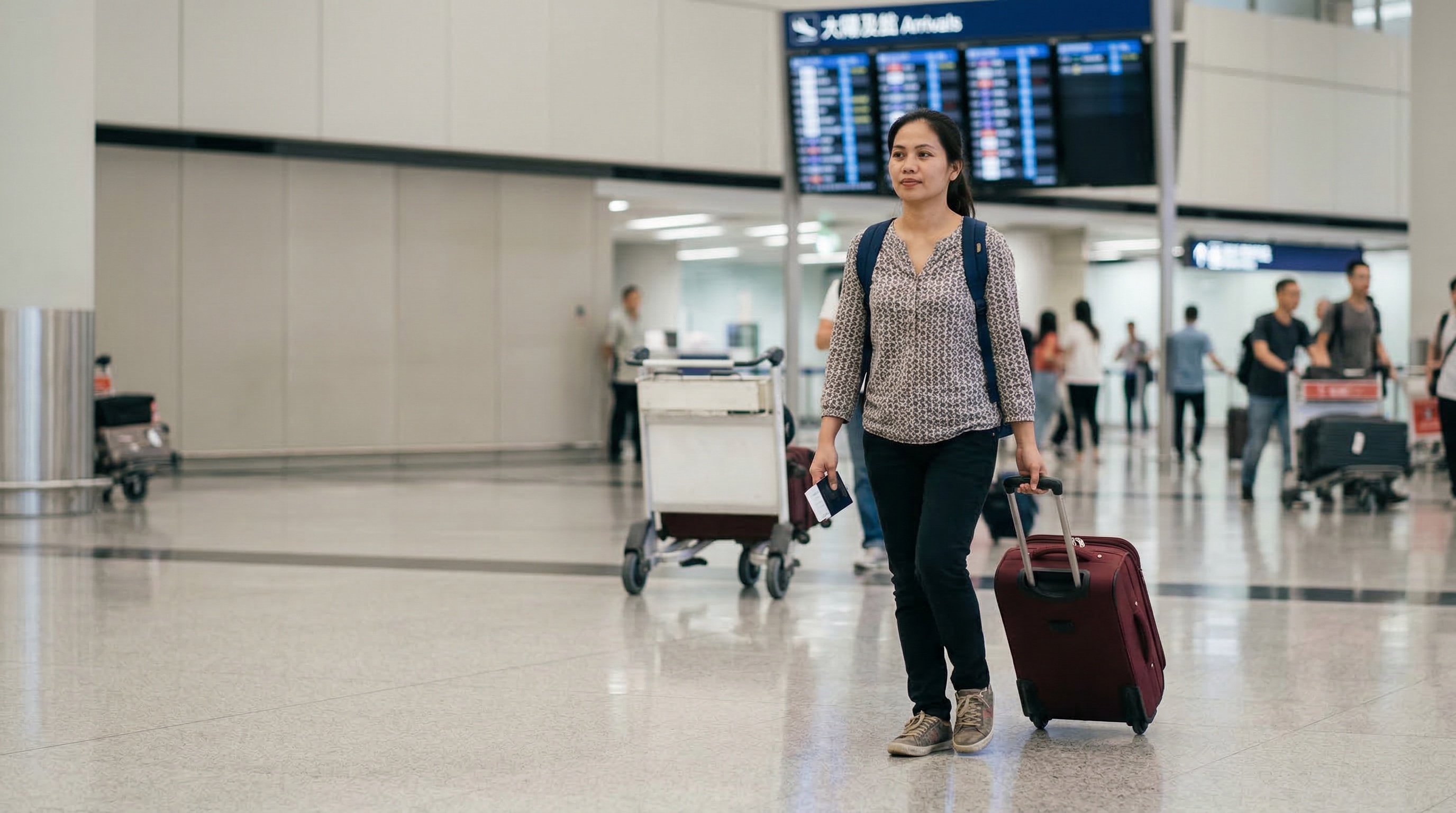
Introduction: Is the Middle East No Longer a Worker's Paradise?
In March 2026, the situation in the Middle East deteriorated sharply once again. Escalating tensions around Dubai, areas adjacent to Israel, and regions near Saudi Arabia have left many foreign workers in the region deeply unsettled. The Philippine and Indonesian governments have successively announced evacuation operations or upgraded travel warnings for parts of the Middle East, directly affecting the overseas deployment of workers from both countries.
For Hong Kong employers, does this geopolitical crisis thousands of miles away have any impact? The answer is yes — and the effects are more multi-layered than you might expect. DuckDuckDay breaks down three key domestic helper market trends and explains what employers should do to respond.
Trend 1: Supply Reshuffled — Will More Domestic Helpers Flood Into Hong Kong?
On the surface, a contraction in Middle East job opportunities seems beneficial for Hong Kong — domestic helpers who had planned to work in Dubai or Riyadh may now consider Hong Kong or Singapore instead due to safety concerns. More supply should, in theory, give employers more bargaining power.
However, the reality is not so straightforward. War-driven global inflation and rising energy prices have already pushed airline fuel surcharges noticeably higher. The cost of flights from Manila or Jakarta to Hong Kong rose approximately 15–20% in Q1 2026 compared to the same period last year. These costs ultimately get passed on to the overall import cost of a domestic helper, as agencies face higher administrative and visa processing expenses. In other words, even if more helpers become available, the cost of bringing them to Hong Kong may not fall.
In short: more domestic helpers may want to come to Hong Kong, but the cost of bringing them here is also rising. More supply does not necessarily mean cheaper hiring.
Trend 2: The Psychological Pressure on Existing Helpers — and Pay Rise Demands
More immediate than the supply question is the psychological state of the domestic helper already in your home. The Philippines and Indonesia are both major helper-exporting countries with large numbers of workers in the Middle East. As the conflict spreads, many family members still working abroad find themselves in danger, meaning domestic helpers currently in Hong Kong may be under enormous psychological pressure from their home countries.
This pressure affects employers in two ways: first, emotional instability impacts work performance and reliability; second, as the home economy suffers from the effects of conflict, helpers may feel an urgent need to send more money home — leading them to consider moving to a higher-paying household.
Employer Tip: Care Goes Further Than Control Right Now
DuckDuckDay advises employers to proactively ask about the domestic helper's family situation and show genuine concern. This is not weakness — it is the ideal moment to build a 'psychological contract' that makes her feel valued and stable in her role. A helper who feels secure and cared for is far less likely to leave for a few hundred dollars more elsewhere. Sometimes asking 'Are you worried about your family back home?' is worth more than a pay rise.
Trend 3: The Knock-On Effect on Hiring Costs
Energy prices are the invisible thread pulling at the cost of the domestic helper market. With Middle East tensions persisting, international oil prices in March 2026 are already more than 20% higher than a year ago. The impact on the domestic helper market is far-reaching:
| Cost Item | How Oil Prices Affect It | Real Impact on Employers |
|---|---|---|
| Airfare to HK | Fuel surcharge directly linked to oil price | Higher airfare for incoming helpers |
| Agency Processing Fees | Admin and transport costs passed on | Upward pressure on agency fees |
| Cost of Living in Home Country | Inflation raises prices and family expenses | Helpers more likely to request a pay rise |
| Replacement Waiting Time | Supply chain and document processing delays | Longer waits when urgently needing a replacement |
DuckDuckDay anticipates that if Middle East tensions remain unresolved through Q2 2026, the overall cost of bringing a domestic helper to Hong Kong — including airfare, agency fees, and documentation — could see a 10–15% increase in the second half of the year. Employers who do not currently need to change helpers should consider 'locking in' their existing helper now.
3 Practical Tips for Employers
Tip 1: Renew Early to Lock In Your Current Domestic Helper
If your domestic helper's contract is due to expire in the next 3–6 months, now is the ideal time to initiate early renewal discussions. Renewing early avoids having to recruit during a period of rising market costs, and signals stability to your helper — reducing the incentive for her to leave. Initiating a renewal conversation doesn't need to be complicated. A simple 'We're very happy with you and hope you'll stay on' is often the most powerful retention tool of all.
Tip 2: Consider a 'Local Fit' Domestic Helper to Reduce Overseas Uncertainty
A 'Local Fit' domestic helper is one who has completed a previous contract in Hong Kong and is currently on leave or looking for a new employer. Compared to bringing in a helper fresh from the Philippines or Indonesia, Local Fit has clear advantages: no airfare or some administrative costs to bear, a shorter waiting time (typically 2–4 weeks rather than 3 months), and they are already familiar with Hong Kong life and work culture, meaning a shorter adjustment period.
When market uncertainty is high, a Local Fit domestic helper is a smart way to control costs. DuckDuckDay currently has a number of suitable Local Fit candidates available — feel free to enquire directly.
Tip 3: Stay Informed and Track the Market
The domestic helper market is influenced by geopolitics, oil prices, government policies in multiple countries, and more — changes can happen quickly. DuckDuckDay continuously monitors market developments and regularly publishes analysis on our Blog and Instagram (@duck.duck.day). We recommend bookmarking this page and following our social media, so that when you need to make a decision, you have the most up-to-date market information at hand.
Summary: Middle East tensions are causing a short-term reshuffling of domestic helper supply, but hiring costs are rising due to energy-driven inflation. The best strategy right now is to retain your current helper, consider Local Fit as an alternative, and start preparing for contract expiry well in advance.